给定一棵二叉搜索树的根节点和一个插入值 val。请你把这个 val 插入二叉搜索树中并保持这棵树依然是二叉搜索树。你可以返回任意一个合法结果。
例如:输入二叉树 ,插入一个 4 ,可能的结果有
 ,
, 等等,返回任意一个即可。
,插入一个 4 ,可能的结果有,等等,返回任意一个即可。 数据范围:二叉搜索树节点数满足 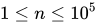 ,二叉搜索树上节点值满足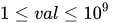
,插入一个 4 ,可能的结果有,等等,返回任意一个即可。 {2,1,3},4{2,1,3,#,#,#,4}
递归到相应的位置,插入 val。如果当前节点为空,插入。如果当前节点比val大时,递归左儿子。如果当前节点比val小时,递归右儿子。
/**
 * #[derive(PartialEq, Eq, Debug, Clone)]
 * pub struct TreeNode {
 *     pub val: i32,
 *     pub left: Option<Box<TreeNode>>,
 *     pub right: Option<Box<TreeNode>>,
 * }
 *
 * impl TreeNode {
 *     #[inline]
 *     fn new(val: i32) -> Self {
 *         TreeNode {
 *             val: val,
 *             left: None,
 *             right: None,
 *         }
 *     }
 * }
 */
struct Solution{

}

type T = Option<Box<TreeNode>>;
use std::cmp::Ordering::{Less, Equal, Greater};

impl Solution {
    fn new() -> Self {
        Solution{}
    }

    /**
    * 代码中的类名、方法名、参数名已经指定,请勿修改,直接返回方法规定的值即可
    *
    *
        * @param root TreeNode类
        * @param val int整型
        * @return TreeNode类
    */
    pub fn insertToBST(&self, mut root: T, val: i32) -> T {
        // write code here
        if root.is_none() {
            Some(Box::new(TreeNode::new(val)))
        } else {
            Self::insert(&mut root, val);
            root
        }
    }
    fn insert(mut node: &mut T, val: i32){
        loop {
            match val.cmp(&node.as_ref().unwrap().val) {
                Less => {
                    if node.as_mut().unwrap().left.is_none() {
                        node.as_mut().unwrap().left = Some(Box::new(TreeNode::new(val)));
                        break;
                    } else {
                        node = &mut node.as_mut().unwrap().left;
                    }
                },
                Greater => {
                    if node.as_mut().unwrap().right.is_none() {
                        node.as_mut().unwrap().right = Some(Box::new(TreeNode::new(val)));
                        break;
                    } else {
                        node = &mut node.as_mut().unwrap().right;
                    }
                },
                Equal => {
                    todo!();
                },
            };
        };
    }
} 


扫描二维码,关注牛客网

下载牛客APP,随时随地刷题

扫一扫,把题目装进口袋

扫描二维码,进入QQ群

扫描二维码,关注牛客公众号
 京公网安备
11010502036488号
京公网安备
11010502036488号


