合并 k 个升序的链表并将结果作为一个升序的链表返回其头节点。
数据范围:节点总数  ,每个节点的val满足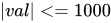
要求:时间复杂度 )
// 优先队列
public class Solution {

    public ListNode mergeKLists(ArrayList<ListNode> lists) {
        //预处理
        if (lists == null || lists.isEmpty()) {
            return null;
        }
        PriorityQueue<ListNode> heap = new PriorityQueue<>(
            Comparator.comparingInt(node -> node.val)
        );
        // 初始化堆
        for (ListNode list : lists) {
            if (list != null) heap.offer(list);
        }
        ListNode dummy = new ListNode(0);// 哑节点
        ListNode current = dummy;//指向下一个要连接的节点
        while (!heap.isEmpty()) {
            ListNode node = heap.poll();
            current = current.next = node;

            if (node.next != null) {
                heap.offer(node.next);
            }
        }
        return dummy.next;
    }
} import java.util.*;
/*
* public class ListNode {
* int val;
* ListNode next = null;
* public ListNode(int val) {
* this.val = val;
* }
* }
*/
public class Solution {
/**
* 代码中的类名、方法名、参数名已经指定,请勿修改,直接返回方法规定的值即可
*
*
* @param lists ListNode类ArrayList
* @return ListNode类
*/
public ListNode mergeKLists(ArrayList<ListNode> lists){
if(lists.isEmpty()){
return null;
}
ListNode list=lists.get(0);
for(int i=1;i<lists.size();i++){
ListNode list2=lists.get(i);
list=mergeKLists(list,list2);
}
return list;
}
public ListNode mergeKLists (ListNode pHead1, ListNode pHead2) {
ListNode pHead = new ListNode(0);
ListNode temp1 = pHead;
while (pHead1 != null && pHead2 != null) {
if (pHead1.val <= pHead2.val) {
temp1.next = pHead1;
pHead1 = pHead1.next;
} else {
temp1.next = pHead2;
pHead2 = pHead2.next;
}
temp1 = temp1.next;
}
if (pHead1 != null) {
temp1.next = pHead1;
}
if (pHead2 != null) {
temp1.next = pHead2;
}
return pHead.next;
}
} import java.util.*;
// 类似归并排序:两两合并
public class Solution {
public ListNode mergeKLists (ArrayList<ListNode> lists) {
// write code here
while (lists.size() > 1) { // 合并至只剩1个
ArrayList<ListNode> newLists = new ArrayList<>(); // 新List
for (int i = 0; i < lists.size(); i += 2) { // 选两两合并
ListNode node1 = lists.get(i), node2 = null;
if (i + 1 < lists.size()) node2 = lists.get(i + 1);
newLists.add(merge(node1, node2));
}
lists = newLists;
}
return lists.size() == 0 ? null : lists.get(0);
}
// 合并两个升序链表
private ListNode merge(ListNode node1, ListNode node2) {
if (node1 == null) return node2;
if (node2 == null) return node1;
ListNode head = new ListNode(-1), p = head; // 表头节点
while (node1 != null && node2 != null) { // 合并
if (node1.val <= node2.val) {
p.next = node1;
node1 = node1.next;
} else {
p.next = node2;
node2 = node2.next;
}
p = p.next;
}
while (node1 != null) { // 剩余节点
p.next = node1;
node1 = node1.next;
p = p.next;
}
while (node2 != null) { // 剩余节点
p.next = node2;
node2 = node2.next;
p = p.next;
}
return head.next;
}
}
import java.util.*;

/*
 * public class ListNode {
 *   int val;
 *   ListNode next = null;
 *   public ListNode(int val) {
 *     this.val = val;
 *   }
 * }
 */

/**
 * NC51 合并k个已排序的链表
 * @author d3y1
 */
public class Solution {
    /**
     * 代码中的类名、方法名、参数名已经指定,请勿修改,直接返回方法规定的值即可
     *
     *
     * @param lists ListNode类ArrayList
     * @return ListNode类
     */
    public ListNode mergeKLists (ArrayList<ListNode> lists) {
        // return solution1(lists);
        // return solution2(lists);
        return solution22(lists);
        // return solution3(lists);
    }

    /**
     * 连续归并
     * @param lists
     * @return
     */
    private ListNode solution1(ArrayList<ListNode> lists){
        ListNode dummyHead = new ListNode(-1);
        for(ListNode list: lists){
            dummyHead.next = merge(dummyHead.next, list);
        }

        return dummyHead.next;
    }

    /**
     * 合并
     * 合并两个有序链表
     * @param list1
     * @param list2
     * @return
     */
    private ListNode merge(ListNode list1, ListNode list2){
        if(list1 == null){
            return list2;
        }
        if(list2 == null){
            return list1;
        }

        if(list1.val <= list2.val){
            list1.next = merge(list1.next, list2);
            return list1;
        }else{
            list2.next = merge(list1, list2.next);
            return list2;
        }
    }

    /**
     * 二分归并
     * @param lists
     * @return
     */
    private ListNode solution2(ArrayList<ListNode> lists){
        int k = lists.size();
        if(k == 0){
            return null;
        }

        int left,right;
        for(int gap=k; gap>1; gap=(gap+1)/2){
            for(int i=0; i<(gap+1)/2; i++){
                left = i;
                right = gap-i-1;
                if(left < right){
                    lists.set(left, merge(lists.get(left), lists.get(right)));
                    lists.remove(right);
                }
            }
        }

        return lists.get(0);
    }

    /**
     * 递归归并
     * @param lists
     * @return
     */
    private ListNode solution22(ArrayList<ListNode> lists){
        return divide(lists, 0, lists.size()-1);
    }

    /**
     * 分治: 递归
     * @param lists
     * @param left
     * @param right
     * @return
     */
    private ListNode divide(ArrayList<ListNode> lists, int left, int right){
        if(left > right){
            return null;
        }
        else if(left == right){
            return lists.get(left);
        }

        int mid = left+(right-left)/2;

        return merge(divide(lists, left, mid), divide(lists, mid+1, right));
    }

    /**
     * 堆: 优先队列
     * @param lists
     * @return
     */
    private ListNode solution3(ArrayList<ListNode> lists){
        PriorityQueue<Integer> minHeap = new PriorityQueue<>();
        for(ListNode node: lists){
            while(node != null){
                minHeap.offer(node.val);
                node = node.next;
            }
        }

        ListNode head = new ListNode(-1);
        ListNode tail = head;
        while(!minHeap.isEmpty()){
            tail.next = new ListNode(minHeap.poll());
            tail = tail.next;
        }

        return head.next;
    }
} import org.junit.jupiter.api.Test;
import java.util.ArrayList;
import java.util.PriorityQueue;
public class Solution2 {
/*
todo: 不需要头节点.
*/
/**
* 代码中的类名、方法名、参数名已经指定,请勿修改,直接返回方法规定的值即可
*
* @param pHead1 ListNode类
* @param pHead2 ListNode类
* @return ListNode类
*/
public ListNode Merge(ListNode pHead1, ListNode pHead2) {
// 总和节点
ListNode all = new ListNode(0, null);
ListNode all_index = all;
// 两个指针都有值,且值不相等,比较两个值,较小的那个节点作为新链表的节点,然后指针向后移动一位
ListNode one_index = pHead1;
ListNode two_index = pHead2;
ListNode temp1 = null;
ListNode temp = null;
// 链表的到达末尾,的标志是next为null.
while (one_index != null && two_index != null) {
if (one_index.val < two_index.val) {
temp = one_index;
one_index = one_index.next;
all_index.next = temp;
all_index = all_index.next;
} else {
temp1 = two_index;
two_index = two_index.next;
all_index.next = temp1;
all_index = all_index.next;
}
}
if (one_index == null) {
all_index.next = two_index;
} else {
all_index.next = one_index;
}
return all.next;
}
// write code here
@Test
public void test1() {
Integer[] ListNodevals = {1};
Integer[] ListNodevals1 = {2};
ListNode listNode1 = headList(ListNodevals);
ListNode listNode2 = headList(ListNodevals1);
// 获得头和尾部分.
ListNode listNode = Merge(listNode1, listNode2);
// 打印
while (listNode != null) {
System.out.println("listNode.val:" + listNode.val);
listNode = listNode.next;
}
}
public ListNode headList(Integer[] ListNodevals) {
//头结点
ListNode head = new ListNode();
////指针.
ListNode ListNode = head;
for (int i = 0; i < ListNodevals.length; i++) {
// 新的节点
ListNode new_ListNode = new ListNode(ListNodevals[i], null);
// 链表指针的next指向新的节点
ListNode.next = new_ListNode;
ListNode = new_ListNode;
}
// 没有头结点.
return head.next;
}
/**
* 找到最小value变成加入到总链表或者其他结构
* 之后变动的链表1进行++
*
* @param lists
* @return
*/
public ListNode mergeKLists(ArrayList<ListNode> lists) {
if (lists.size() == 0 || lists == null) {
return null;
}
// 每个链表有链表指针和temp;
PriorityQueue<Integer> pq = new PriorityQueue<>();
for (ListNode list : lists) {
while (list != null) {
pq.add(list.val);
list = list.next;
}
}
ListNode head_node = new ListNode(0, null);
ListNode head = head_node;
ListNode temp = head;
while (!pq.isEmpty()) {
ListNode listNode1 = new ListNode(pq.poll(), null);
temp.next = listNode1;
temp = temp.next;
}
return head.next;
}
@Test
public void test2() {
Integer[] ListNodevals = {1, 2, 3};
Integer[] ListNodevals1 = {4,5,6,7};
ListNode listNode = headList(ListNodevals);
ListNode listNode1 = headList(ListNodevals1);
ArrayList<ListNode> lists = new ArrayList<>();
lists.add(listNode);
lists.add(listNode1);
ListNode all_list = mergeKLists(lists);
while (all_list != null) {
System.out.println("all_list.val:" + all_list.val);
all_list = all_list.next;
}
}
}
使用的是优先队列进行处理,把所有的元素扔进优先队列,之后再不断获取最小元素
import java.util.*;
/*
 * public class ListNode {
 *   int val;
 *   ListNode next = null;
 *   public ListNode(int val) {
 *     this.val = val;
 *   }
 * }
 */

public class Solution {
    /**
     * 代码中的类名、方法名、参数名已经指定,请勿修改,直接返回方法规定的值即可
     *
     *
     * @param lists ListNode类ArrayList
     * @return ListNode类
     */
    public ListNode mergeKLists (ArrayList<ListNode> lists) {

        // write code here
        List<Integer> vals = new ArrayList<>();

        for(ListNode head : lists){
            while(head!=null){
                vals.add(head.val);
                head = head.next;
            }
        }

        Collections.sort(vals);

        ListNode dummy = new ListNode(0);
        ListNode cur = dummy;

        for(Integer n : vals){
            cur.next =  new ListNode(n);
            cur=cur.next;
        }

        return dummy.next;
    }
}
暴力解法
public class Solution {
    /**
     * 代码中的类名、方法名、参数名已经指定,请勿修改,直接返回方法规定的值即可
     *
     *
     * @param lists ListNode类ArrayList
     * @return ListNode类
     */
    public ListNode mergeKLists (ArrayList<ListNode> lists) {
        if(lists.isEmpty()){
            return null;
        }
        ListNode list = lists.get(0);
        // write code here
        for (int i = 1; i < lists.size(); i++) {
            ListNode list2 = lists.get(i);
            list = Marg(list,list2);
        }
        return list;
    }

    public static ListNode Marg(ListNode node1, ListNode node2) {
        if (node1 == null) {
            return node2;
        }

        if (node2 == null) {
            return node1;
        }

        if (node1.val <= node2.val) {
            node1.next = Marg(node1.next, node2);
            return node1;
        }else{
            node2.next = Marg(node2.next, node1);
            return node2;
        }

    }
} public ListNode mergeKLists (ArrayList<ListNode> lists) {
if(lists.size() == 0){
return null;
}
if(lists.size() == 1){
return lists.get(0);
}
ListNode const_head = new ListNode(0);
ListNode pre = const_head;
while(lists.size() > 1){
ListNode min_node = lists.get(lists.size()-1);
int min_index = lists.size()-1;
for(int i=lists.size()-1;i>=0;i--){
ListNode cur_node = lists.get(i);
if(cur_node == null){
lists.remove(i);
min_index--;
}else if(min_node == null || cur_node.val < min_node.val){
min_node = cur_node;
min_index = i;
}
}
if(min_node == null) return const_head.next;;
pre.next = min_node;
pre = pre.next;
lists.set(min_index,min_node.next);
}
pre.next = lists.get(0);
return const_head.next;
} import java.util.*;
/*
* public class ListNode {
* int val;
* ListNode next = null;
* public ListNode(int val) {
* this.val = val;
* }
* }
*/
public class Solution {
/**
* 代码中的类名、方法名、参数名已经指定,请勿修改,直接返回方法规定的值即可
*
*
* @param lists ListNode类ArrayList
* @return ListNode类
*/
public ListNode mergeKLists (ArrayList<ListNode> lists) {
// write code here
// 算法时间复杂度O(NlogN),额外空间复杂度O(logN)
// 分治思想,参考归并排序,K个链表可以两两合并,新合并的链表再两两合并,直到K个链表全部合并
// 这道题的重点就是把lists的划分合并区间函数的递归调用写出来
return divideMerge(lists, 0, lists.size() - 1);
}
// 划分合并区间函数
ListNode divideMerge(ArrayList<ListNode> lists, int left, int right) {
// 递归出口 - 划分到没法再分为止
if (left > right) {
return null;
}
else if (left == right) {
return lists.get(left);
}
// 重点!从中间分成两段,再将合并好的两段合并
int mid = (left + right) / 2;
return Merge(
divideMerge(lists, left, mid),
divideMerge(lists, mid + 1, right)
);
}
// 两个链表合并函数 - 上一道题的过程
public ListNode Merge(ListNode pHead1, ListNode pHead2) {
// 算法时间复杂度O(N),额外空间复杂度O(1)
// 1.处理边界情况,确保两个链表非空
if (pHead1 == null) {
return pHead2;
}
if (pHead2 == null) {
return pHead1;
}
// 2.找到两个有序链表头结点中较小的那个,记为targetHead,以target链表为合并的容器,另外一个链表记为source链表
ListNode targetHead;
ListNode sourceHead;
if (pHead1.val <= pHead2.val) {
targetHead = pHead1;
sourceHead = pHead2;
} else {
targetHead = pHead2;
sourceHead = pHead1;
}
// 3.遍历target链表,针对每个targetCur结点,去source中尝试找到这样一个子序列:
// 该子序列的所有结点满足 >= targetCur 且 < targetNext(targetCur.next)
// 若能够找到,则用sourceStart和sourceEnd固定其头和尾的位置,然后将这个子序列完整纳入到target链表中
ListNode targetCur = targetHead;
ListNode targetNext = targetHead.next;
ListNode sourceCur = sourceHead;
ListNode sourceStart = null;
ListNode sourceEnd = null;
while (targetCur != null) {
System.out.println("targetCur: " + targetCur.val);
targetNext = targetCur.next;
if (sourceCur != null && sourceCur.val >= targetCur.val) {
// 3.1 发现了source链表中有一个 >= targetCur的结点,先记为sourceStart
// 注意!sourceStart可能已经 >= targetNext的,这种情况是不能将其纳入的,后续要对这种情况做好判断!
sourceStart = sourceCur;
System.out.println("发现了一个source链表中比targetCur大的结点:" +
sourceStart.val);
if (targetNext == null) {
// 3.2 如果targetCur没有下一个结点,那么sourceStart及其后续结点必然满足要求
// 此时就会把从sourceStart开始剩余的source结点全部纳入进来,可以直接结束
System.out.println("此时target链表已经到了最后一个结点了");
targetCur.next = sourceStart;
break;
}
// 3.3 如果targetCur还有下一个结点,那么必须找到 >= targetCur,且 < targetNext的source结点
while (sourceCur.next != null && sourceCur.next.val < targetNext.val) {
// 找到source链表中一系列比targetCur大,且比targetNext小的source结点,确定它们的头和尾
// 注意!sourceCur可能本身已经 >= targetNext了,结束while循环后一定要做对应判断!
sourceCur = sourceCur.next;
}
sourceEnd = sourceCur;
// 3.4 此时存在一种可能,即只有唯一的sourceCur,确实 >= target,但是它同时 >= targetNext,此时不应该纳入,应该提前迭代
if (sourceEnd.val >= targetNext.val) {
System.out.println("虽然 >= targetCur,但它同时 >= targetNext,此时也不应该放入");
targetCur = targetNext;
continue;
}
sourceCur = sourceCur.next;
// 3.5 找到了sourcr链表中满足条件的子序列,且以sourceStart开头,sourceEnd结尾,将他们整体纳入到target链表中
targetCur.next = sourceStart;
sourceEnd.next = targetNext;
}
// 3.6 target迭代遍历
targetCur = targetNext;
}
return targetHead;
}
} public ListNode mergeKLists (ArrayList<ListNode> lists) {
// write code here
if (lists == null || lists.isEmpty()) return null;
Iterator<ListNode> it = lists.iterator();
ListNode res = it.next();
while (it.hasNext()) res = merge(res, it.next());
return res;
}
private ListNode merge(ListNode a, ListNode b) {
if (a == null) return b;
if (b == null) return a;
if(a.val <= b.val) {
a.next = merge(a.next, b);
return a;
} else {
b.next = merge(b.next, a);
return b;
}
} 多链表合并
import java.util.*;
/*
* public class ListNode {
* int val;
* ListNode next = null;
* public ListNode(int val) {
* this.val = val;
* }
* }
*/
public class Solution {
/**
* 代码中的类名、方法名、参数名已经指定,请勿修改,直接返回方法规定的值即可
*
*
* @param lists ListNode类ArrayList
* @return ListNode类
*/
public ListNode mergeKLists (ArrayList<ListNode> lists) {
// write code here
ListNode head=new ListNode(0), cur=head, min=head;
int minIdx=0;
while(true){
min=null;
for(int i=0;i<lists.size();++i){
if(lists.get(i)!=null){
if(min==null){
min=lists.get(i);
minIdx=i;
}else if(min.val>lists.get(i).val){
min=lists.get(i);
minIdx=i;
}
}
}
if(min==null)
break;
cur.next=min;
cur=min;
lists.set(minIdx, min.next);
}
return head.next;
}
} public ListNode mergeKLists(ArrayList<ListNode> lists) { PriorityQueue<ListNode> list = new PriorityQueue<>(new Comparator<ListNode>() { @Override public int compare(ListNode o1, ListNode o2) { if (o1.val < o2.val) { return -1; } else if (o1.val > o2.val) { return 1; } else { return 0; } } }); // write code here ListNode result = null; //把所有node放到优先级队列中,自动排序,最后一个node的next设置为null即可 for (ListNode listNode : lists) { if (null == listNode) { continue; } while (null != listNode) { list.add(listNode); listNode = listNode.next; } } ListNode cur = null; while (!list.isEmpty()) { if (null == result) { result = cur = list.poll(); } else { cur.next = list.poll(); cur = cur.next; } } if (null != cur) { cur.next = null; } return result; }
    public ListNode mergeKLists (ArrayList<ListNode> lists) {
        PriorityQueue<ListNode> pq = new PriorityQueue<>((x1, x2) -> x1.val - x2.val);
        // pq.addAll(lists.stream().filter(x -> x != null).toList());
        for (ListNode head : lists) {
            if (head != null) {
                pq.add(head);
            }
        }

        ListNode dummy = new ListNode(0);
        ListNode p = dummy;

        while (pq.size() > 0) {
            ListNode top = pq.poll();
            p.next = top;
            top = top.next;
            p = p.next;
            if (top != null) {
                pq.add(top);
            }
        }
        return dummy.next;
    }


扫描二维码,关注牛客网

下载牛客APP,随时随地刷题

扫一扫,把题目装进口袋

扫描二维码,进入QQ群

扫描二维码,关注牛客公众号
 京公网安备
11010502036488号
京公网安备
11010502036488号


